My BiOrb Life 60
REEF SETUP
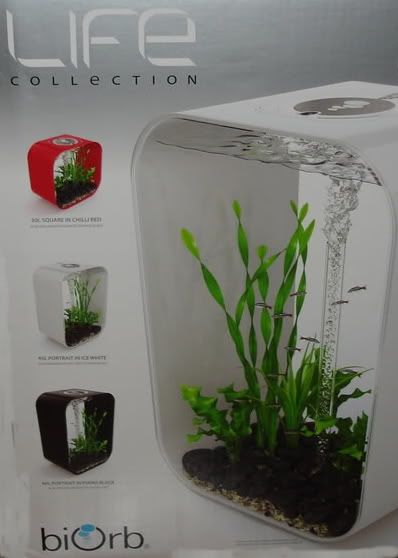
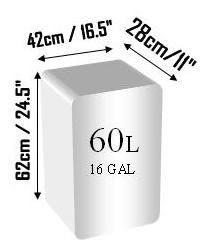
Here is my BiOrb LIFE 60 Litre tank, and the ups and downs of turning it into a marine tank...
I began in November 2009-
I started out by buying the tank online for whopping £300ish :O as my wife would not allow me to have a tank unless she had picked the one she liked best and the BiOrb Life was here tank of choice.
I initially decided to turned it into a FOWLR(Fish Only With Live Rock) with two fish due to the tanks size and its unsuitability for converting to a saltwater tank, but this soon turned to just having a few “easy” corals and "just a few fish"….
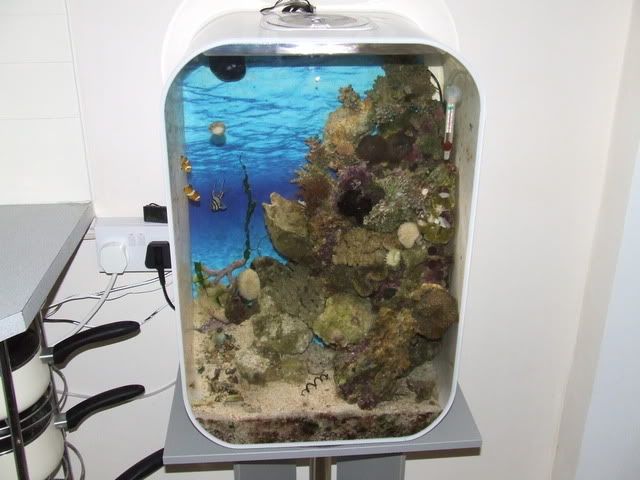
Here is the tank;
 I started by adding ready mixed reef saltwater which is a combination of RO(Reverse Osmosis) water and reef salts containing all the necessary trace elements your tanks inhabitants will need. You can save some money if you buy the salt separately and buy or make RO water and mix your own. but when new to the hobby its a whole lot easier at first just to by it pre mixed.
I then added a 50w heater and set it between 72°f-82°f.
I then considered using the marine conversion kit cartridges designed by ‘Reef One’, but I soon scrapped this idea after receiving advice from other hobbyists and realising it was an unnecessary expense for my intended setup. I intended to use sand and LR(Live Rock) as my biological filtration alongside a 6 litre(10%) water change every 7-10 days. Also, the access to the cartridges once the tank is filled with water can become very difficult. In order to change the filter you would need to empty about 2 litres of water out before being able to put your hand in without water overflowing the tank...
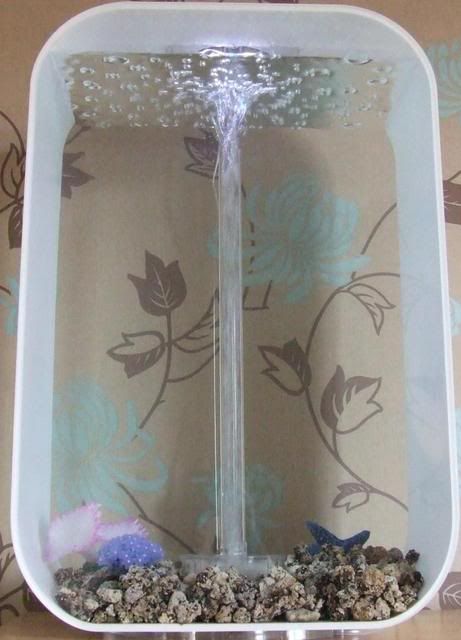
Shortly afterwards![]() I removed the tanks biOrb UGF(Under Gravel Filter) as I found that it served no purpose in a my marine tank. Prior to removing it I had cut a hole in the bottom of a plastic bow and placed it over the tube to keep the UGF and be able to have sand also…but I later ended up scrapping the who idea and just removing the tube and UGF totally and blocking of the hole. I lost the fancy air bubbles but also benefited from no salt creep or water evaporation. Here is the tank with the sand bowl mod as shown in pictures to the left;
I removed the tanks biOrb UGF(Under Gravel Filter) as I found that it served no purpose in a my marine tank. Prior to removing it I had cut a hole in the bottom of a plastic bow and placed it over the tube to keep the UGF and be able to have sand also…but I later ended up scrapping the who idea and just removing the tube and UGF totally and blocking of the hole. I lost the fancy air bubbles but also benefited from no salt creep or water evaporation. Here is the tank with the sand bowl mod as shown in pictures to the left;
Shortly afterwards
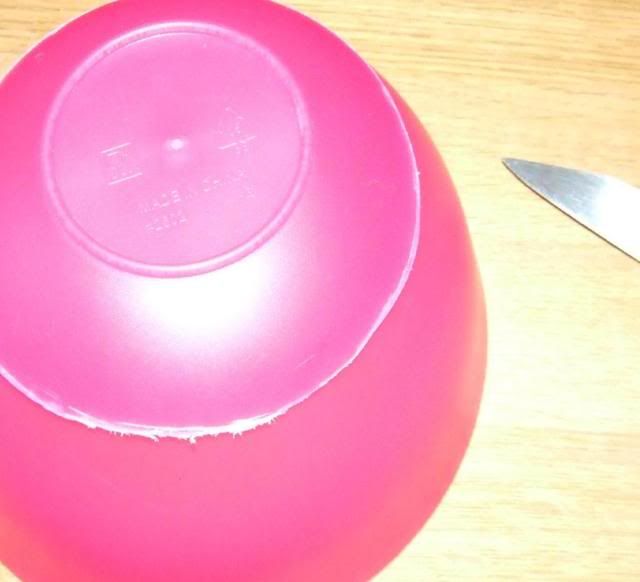 I removed the tanks biOrb UGF(Under Gravel Filter) as I found that it served no purpose in a my marine tank. Prior to removing it I had cut a hole in the bottom of a plastic bow and placed it over the tube to keep the UGF and be able to have sand also…but I later ended up scrapping the who idea and just removing the tube and UGF totally and blocking of the hole. I lost the fancy air bubbles but also benefited from no salt creep or water evaporation. Here is the tank with the sand bowl mod as shown in pictures to the left;
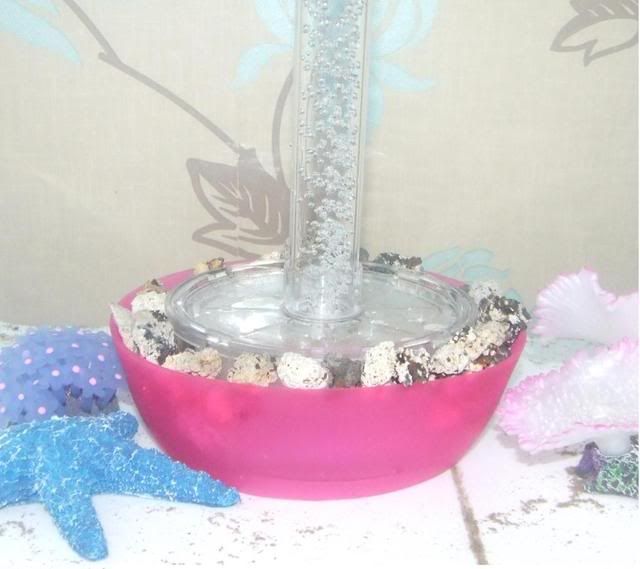 I decided to keep some of the ceramic media inside the bowl to allow it to get colonised with the de-nitrifiying bacteria to assist the nitrogen cycle. This bacteria lives in the Live Sand and Live Rock and in short eats the toxins in the water like ammonia and nitrite, then it releases it back into the water as a less harmful nitrate. I then remove this nitrate every 7-10 days with a 10% water change.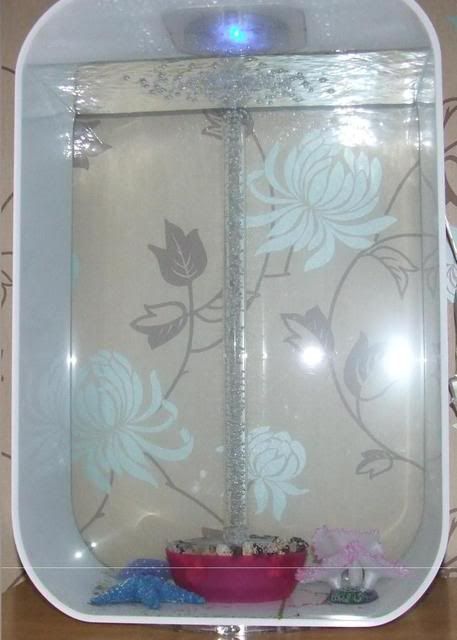
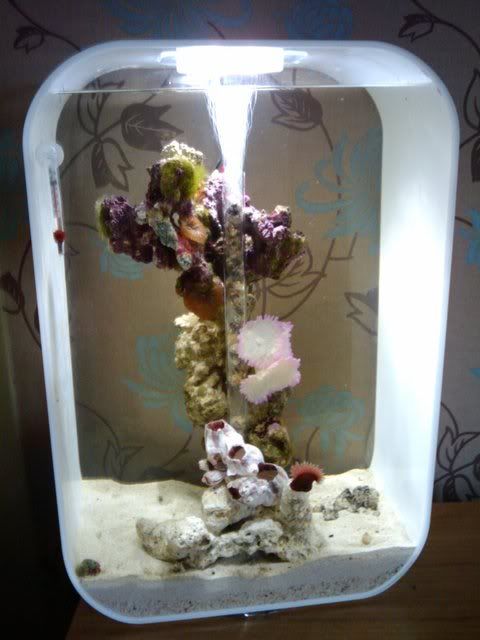 Then I slowly over a few weeks continued adding LR until I reached about 7kg. whilst letting it cycle I just watched all the little hitchhiking critters crawl out of the sand and rock, this is maybe the only thing I can proudly say I did correctly by allowing two months before adding livestock. During this time I had lots of fun just watching all sorts of critters merge and grow on the rock and sand. I had brittle star fish, keyhole limpets, crabs, zoanthids and many more strange things.
While allowing the tank to cycle and stabilise I bought a Reef Master Test kit for testing the waters parameters such as NO3(Nitrate), PH(Percentage Hydrogen), NH3(Ammonia) and NO2(Nitrite)...
once I started stocking corals I then obtained a CA(Calcium), KH(Carbon Hardness) and a PO4(Phosphate) test kit to ensure my water was suitable for corals to survive and be in good health
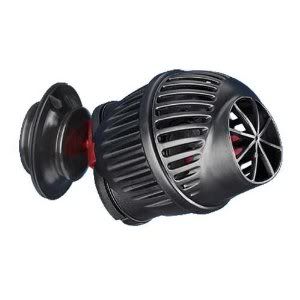
Once I had removed the air tube and UGF
I no longer had water circulation so I opted for a nano sized power head to get water flow around rock, sand and heater. without any circulation the tank will not be warm or oxygenated and the biological filtration would be very limited causing many other problems.
I have since added another pump as the flow was not enough once I added fish and corals.
After allowing two month for everything to settle and mature a little, I started slowly adding my fish.
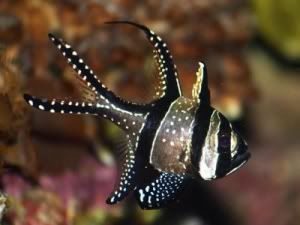
Firstly a Bangaii Cardinal aka(Rambo),
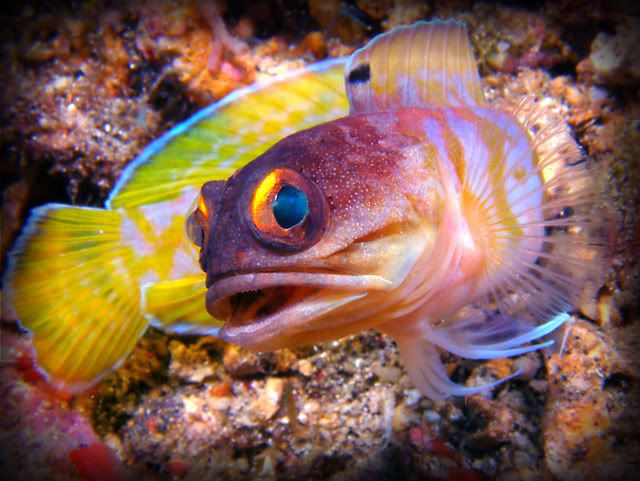
Then two weeks later I added a Tiger Jawfish aka(Justin)
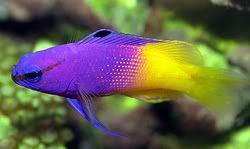
Followed by a Royal Grammar aka(PurLow)
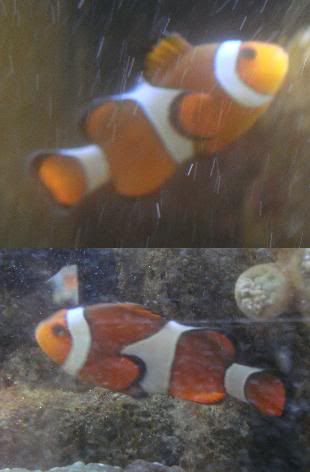
And then with great embarrassment and regret, I added a further two Clown Fish aka(Nemo & Marlin) which pushed my biological filtration to its limit or more like past the limit! but I was not aware of this due to ignorance L
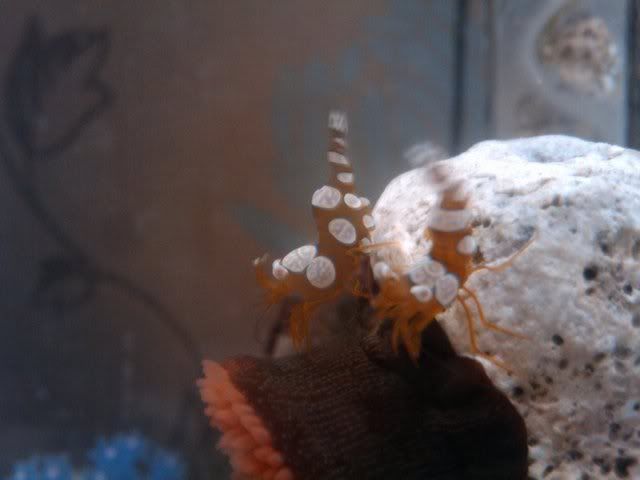
I also ended up getting a lovely mated pair of sexy shrimp that hosted a beadlet anemone I had bought off an online auction site with the information that these were marine compatible and hardy(another error I made) these turned out to be hardy cold water nems. The anemones bred at an alarming rate before going on the declined…and subsequently being removed. The shrimp however were very adventurous and thrived;
This all took approx 6 months to stock. Overstocked I know, but with the 7Kg of LR & DSB along with weekly 20-25% water changes I was managing to keep NO3(Nitrate) levels in the 15-30ppm range...
The tank was running smoothly and looked great
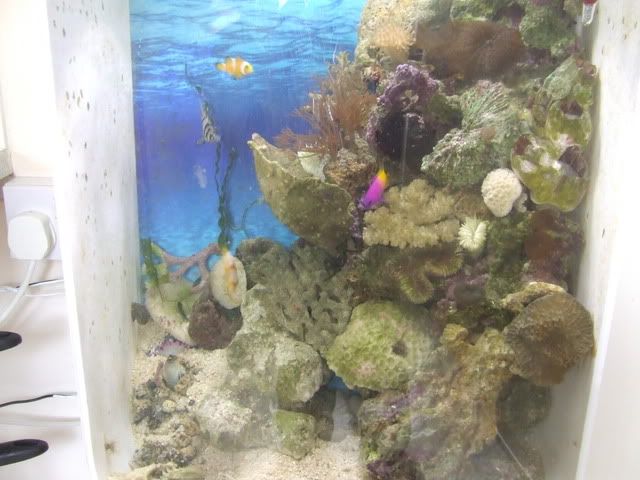
CRASH!!!
Life was now bad
 October 2010- Until this point I had happily kept the above tank running smoothly for nearly 12 months… but then things took a turn for the worst whilst sunning myself in Lanzarote with the family. About four days into my holiday my neighbour left me a message on my mobile reporting that there was a fish sleeping on the sand and my water was cloudy!
My fish were fed every other day on pellets and frozen brine shrimp and this was also arranged with the neighbour who happily fed them as per my instructions.
Usually I would leave the tank up to 10 days without a water change and feed fish every two days and still maintained parameters at the acceptable levels.
The tank had crashed and the ammonia had hit the roof, corals were dying and fish were on the decline… I had my parents go around and talked them trough what to do and how to do water changes…luckily I had a 25 litre tub of ready made saltwater aside and a spare tank upstairs as a backup tank.
My backup tank I had up stair that housed my mantis shrimp
My backup tank I had up stair that housed my mantis shrimp
I ended up spending 2 hours on the local pay phone using up all my euros. This point was the closest I have come to quitting the hobby and selling the tank on an auction site. After a few weeks licking my wounds and feeling depressed I decided to read more and learn more about keeping a marine tank to reduce the chances of a tank crash in the future.
I never was entirely sure what the exact cause was, but looking back it is likely it was down to the tank being overstocked and not matured enough for the livestock and the crash just happened to be whilst I was on my holidays…
Once back from my holidays and mentally back on track, I decided to reduce my stocking levels and started thinking of ways to reduce N03(Nitrate)& P04(Phosphate) and aimed to make my tank more stable.
Firstly, I decided to upgrade my light to enable me to house corals, promote coralline algae and to help deter any hair and slime algae’s…
I went through a number of lights before finding the most powerful and suitable light for the tank;
Upgrading my standard ILED light
![]()
![]()
Not entirely happy with the light I then went for a more discreet looking submersible spot light and utilised the old lamp shade to hide its wires. This was a 20'000k spot light that had a nice blue colour and had very high lumen's (pretty bright)
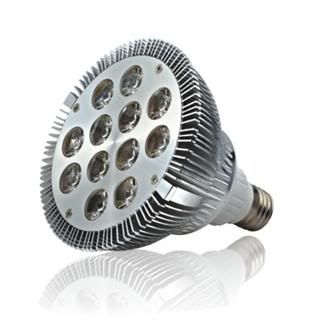
I started by removing my BiOrb ILED light and replacing it with a par38 multiple LED bulb raised above tank with a white lamp holder. It was nearer to the yellow end of the spectrum at 7’000k and only 15watts but was a minor improvement to the low voltage 5000k BiOrb ILED Light.
Not entirely happy with the light I then went for a more discreet looking submersible spot light and utilised the old lamp shade to hide its wires. This was a 20'000k spot light that had a nice blue colour and had very high lumen's (pretty bright)
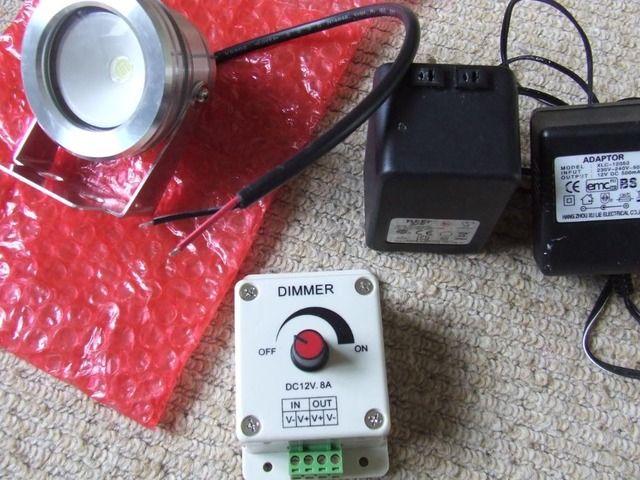
I put a dimmer switch on the light so I could dimm the light at night, but this was not practicle and everytime I wanted to access the tank I would have carefully remove the light first as it was not very secure and I did not want to drill the tank in order to secure it.
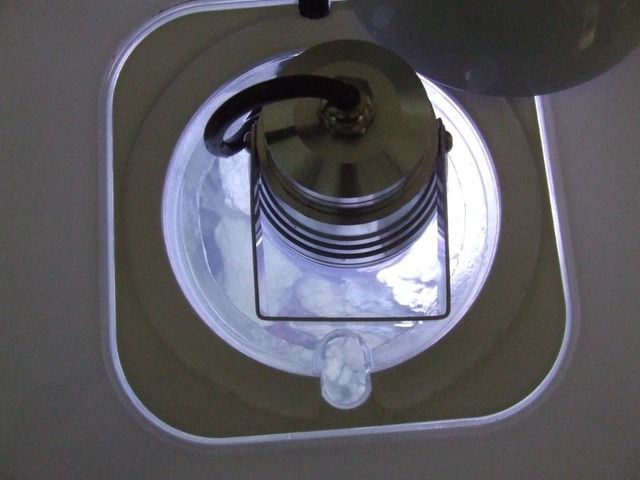
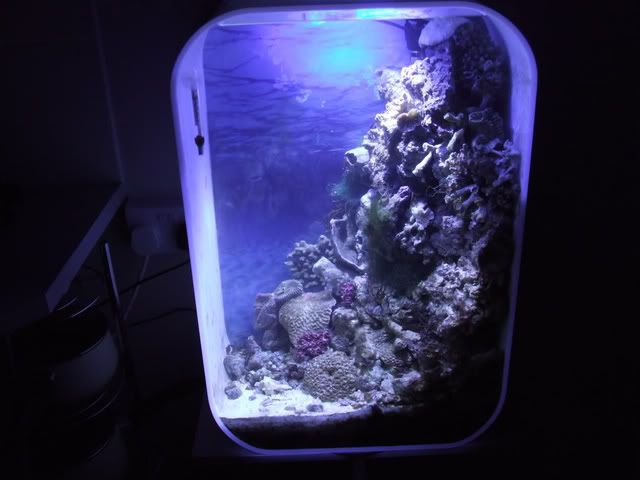
I ended ip cutting a hole in the plastic splash guard and rested it on top
Althought this was a perfect colour for me it was still not upto the job
this has now been put on my 35 litre backup/frag tank as I then decided to upgrade again as it still was not powerful enough for my future planned sps corals
this has now been put on my 35 litre backup/frag tank as I then decided to upgrade again as it still was not powerful enough for my future planned sps corals
Early-Mid 2011-
I finally settled on a suitable light for all my coral and fish needs in the shape of a ‘TMC AquaBeam 1000 HD ultra solid state aquarium tile’ with a respectable reef white 7x14'000 and 2x 50’000 blue LED’s Cree XP-E LED’s and still only around 30 watts of power;
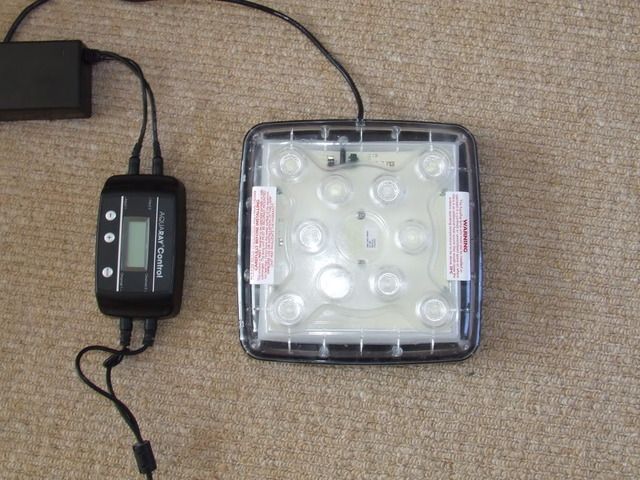
Picture of LED tile and controller to enable me to set it in the same way you can with the BiOrb ILED. I now have all LED's on 12hours
a day then just blue LED's on in the nighttime....
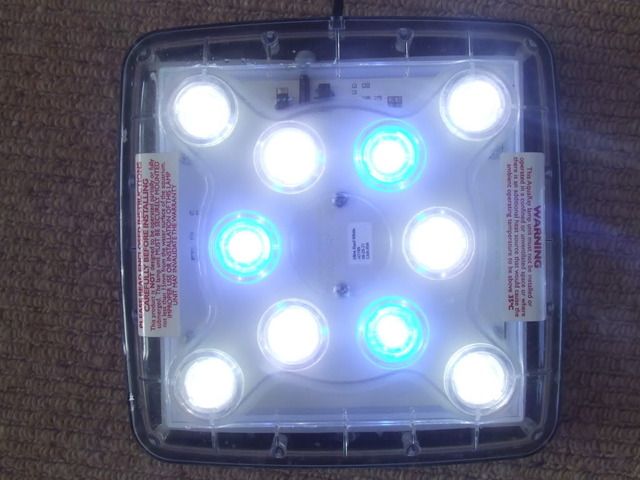
Turned on with both blue and white LED's
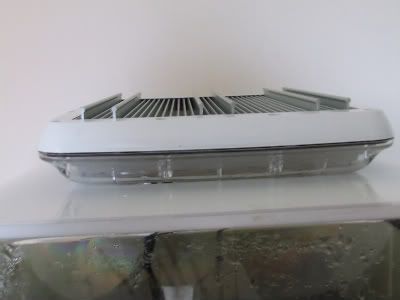 Sat on top of my tank and a perfect fit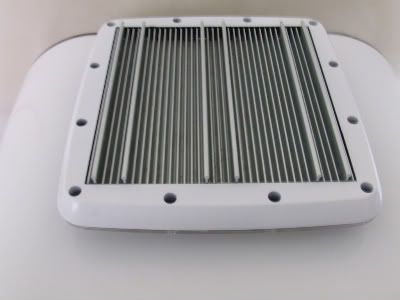
No heat problems and is only warm to touch after being on all day
Adding more water volume
To help reduce NO3 & p04 I decided that the only real option would be to add more water volume, so I added a 15 litre sump with and added a fuge area for growing algae. This fuge area with macro algae inside and a constant 4000k-6000k light on helps stabilise PH at night due to Algae absorbing and releasing oxygen when lights go on and off in your main tank. Macro algae in the sump(fuge) area also helps absorbs nuisance PO4 and N03 that harms your fish and corals health. I also added a little sand bed and added a compartment for my heater and skimmer so I did not need them in hidden in my BiOrb.
Here is some of my dodgy but accurate blue prints I drew up whilst waiting for the equipment;
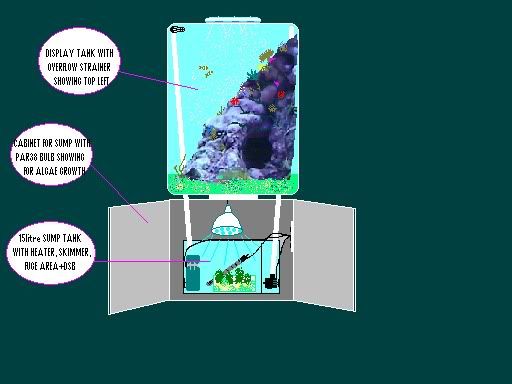
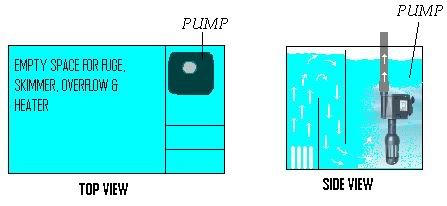
The setting up of the cabinet, pipe work, sump and the hole drilling of the tank
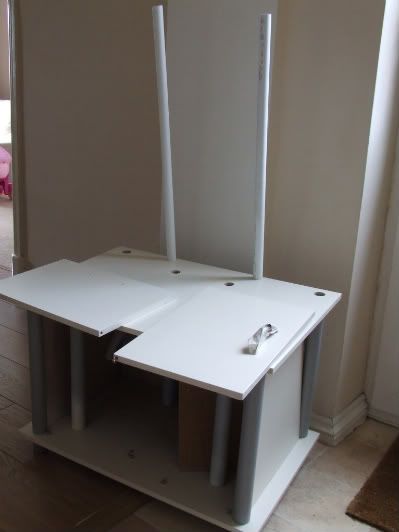
Found a very cheap cabinet and added extra support post inside and drilled holes in top and back to thread some pipework through to exchange the water between sump and tank.
All this equipment is available at most DIY shops and is very easy to put together

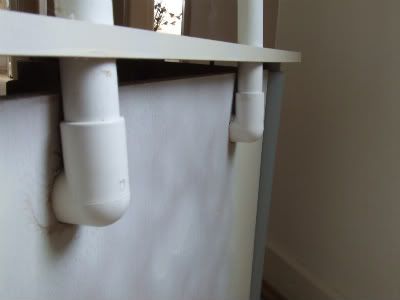
A very messy silicone job on my overflow and returns!
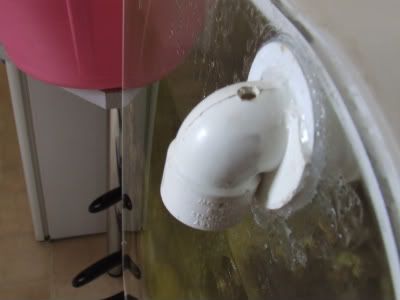
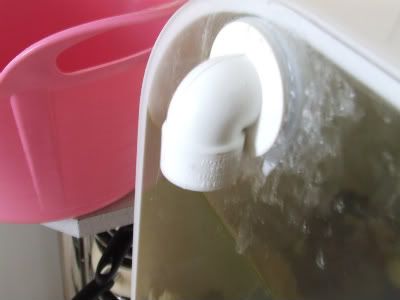
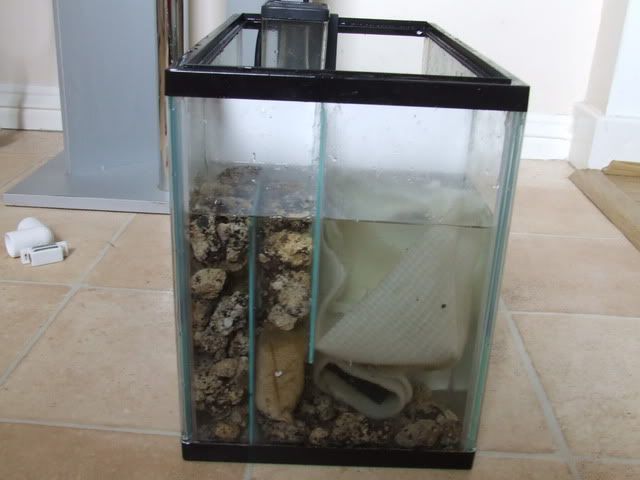
Here is the sump prior to making the compartments
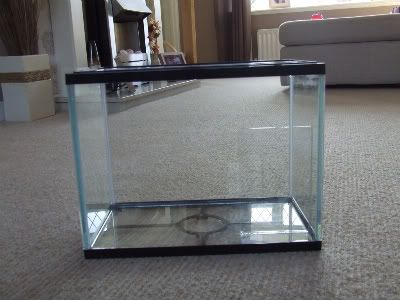
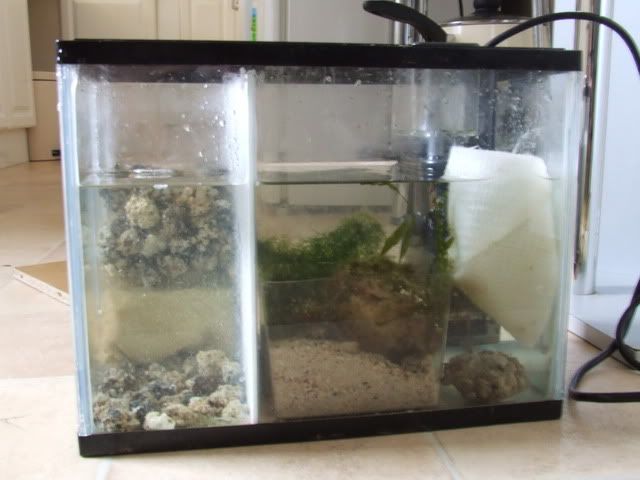
Once sump all setup
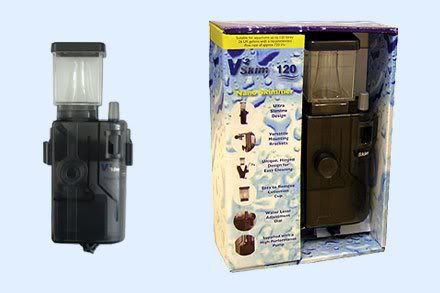
I then bought a skimmer- the TMC V2 Skim 120.
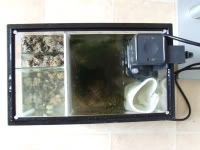
2011 JUNE-
I now have the tank setup with a skimmer, sump and a lighting upgrade as above. I do a 10% water change every 7-10 days and dose Caribsea PurpleUp, Mag and strontium weekly/two weekly ish… and RedSea NO3 P04-X daily.
In terms of livestock and corals I have mushrooms, star polys, zoa, leathers, pink pulsing xenia, Kenya tree’s, acopora sps, pink hystrix/birds nest sps, feather dusters, turbo snails, hermit crabs, 4x skunk cleaner shrimps and a pair of clown fish one black & white and one orange and white with a nice tan. Both seem very happy and on the road to becoming a mated pair with the black & white clown being the male and the slightly larger orange & white clown being the bossy wife of the tank.
My last parameters were as follows;
SG- 1.025/1.026
Temp-80f/82f
PH- 8.4/8.5
Alk- 8
NH3- 0
NO2- 0
N03- 0.25-1.0ppm
PO4- 0.0
Mg- 1300
Iodine- 0.10ppm
Strotium-
My tank today
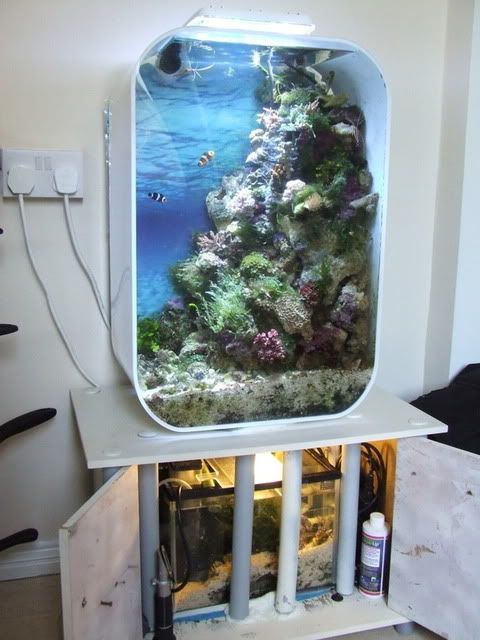
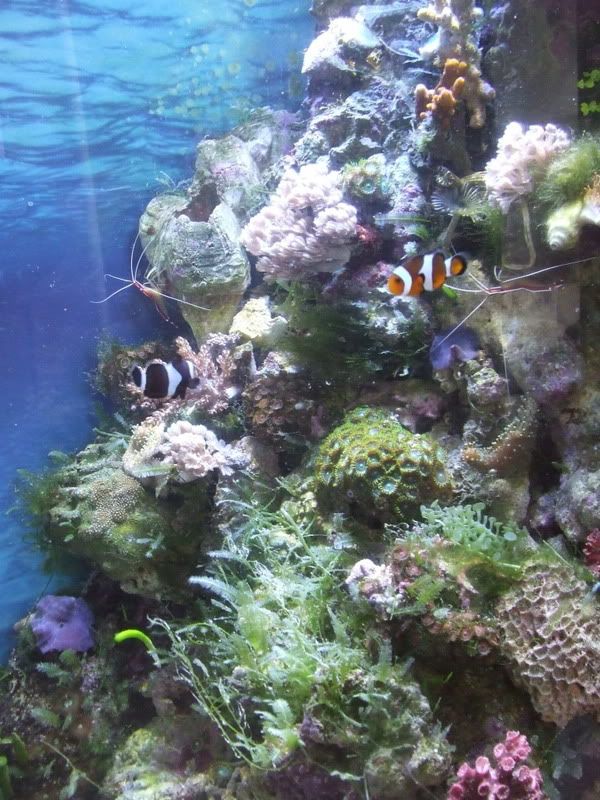
My only future plans for this tank would be a possible cabinet and sump upgrade to a larger and stronger cabinet and maybe a custom built 50+litre sump to increase stability further...
I am toying with the idea of a trickle filter to increase the bio filter and also looking at other ways to make this as maintenance free as possible. The mission continues....
I am toying with the idea of a trickle filter to increase the bio filter and also looking at other ways to make this as maintenance free as possible. The mission continues....
Water changes
When calculating the water volume and how much you need to replace just remember that with live rock, sand and equipment causing water displacement you will no longer have 60 litres of water in your tank. This will also apply when adding supplements ect… my tank with sand and rock before I added the sump had a water volume of about 40 litres!!! 10% for me then was 4 litres changed every 7-10 days but due to stocking levels I was changing about 20% to keep n03 down for the health of my fish and corals… this was a pain and time consuming too. Now I change about 7 litres every 7-10 days with no signs of hair algae or pollution problems.
Summary and tips
My suggestion for anyone thinking of converting a BiOrb Life tank to a marine
tank would be;
Without adding a powerful reef compatible light, increasing your water volume with a sump and attaching a Protein skimmer:
I would not advise having more than 2 small fish and wouldn’t risk anymore than
a handful of the low care mushrooms and softies ect… keep NO3 below 30ppm if only going for fish and even lower if you want the softies as well. As it is a deep tank you will need to stack your rocks quite high in order for you corals to reach to biOrb’s LED lighting, hence why I chose to stack my rock so high up the tank.
With a light upgrade, sump and Protein skimmer attached:
I would suggest maximum of 4 fish no more than 1-4” in size. Ensure the fish have a part of the tank to themselves i.e. not keeping all bottom dwellers. I would suggest one bottom dweller due to the area of the tank and maybe one or two rock dwellers and one or two lively fish such as Clown fish ect…
If the tank and filtration methods are setup correctly and water changes are regular the tank will be effortless with low N03 and PO4…
For anyone thinking of adding a sump I would keep hold of the ceramic media that comes with the tank as once mature in your tank and colonised with de-nitrifying bacteria it become and excellent alternative to live rock rubble and has many uses…
Another thing I have noticed is due to the height of the tank and its foot print plus the addition of 6+kg of rock the tank has a lot of weight pushing down on a plate size point which becomes a problem when finding a cabinet. Long term you will need something with a central support or something really sturdy. I manage to bow my solid oak bed side cabinet and as a result was ordered to decommission the whole tank and find a new stand. a difficult task to say the least, so get it right first time.

Really! 7-10 days? It seems difficult to maintain; but no matter what difficult is if you have enthusiast to do of this habit then you do not noticed that difficulties.
ReplyDeleteSince this blogg, I changed my routine as the tank as matured. Over time the tank became more stable and I was able to reduce water changes to once ever two weeks. The reason for the water change is to reduce pollution levels(Nitrate and Phosphate) to keep algae away and fish healthy... the other reason for water changes is to replace the waters trace elements. Trace elements get absorbed by the fish and corals in the tank. If this is not replaced then the corals will die and so will everything else.
DeleteEver tank absorbs trace elements at different rates depending on what and how many fish and corals you have. This also apllies to the level of pollution your tank produces.
The best and easiest way to have a marine tank is to have the biggest tank your house and budget will allow. This way your tank is more stable and does not require half as much maintenance.
I now have a 280 litre Percula 90 fish tank with a 400 litre sump attached to it.(680 litres total water volume). Needles to say I don't see algae and the trace elements are plentiful. I top up my tank with fresh water weekly due to evaporation and I water change every 3-4 months.
Biorb Life tanks and other small tanks should be avoided for marine fish unless you have alot of time and money to care for them.
Moral to the story is the bigger the better in marine tanks.